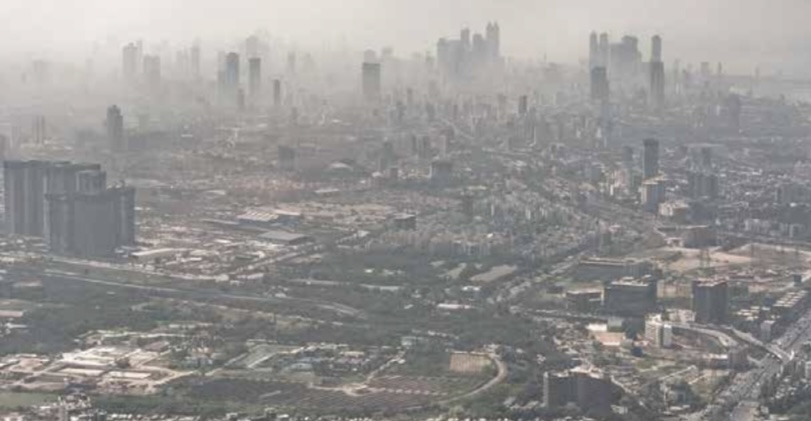

The sky's report card matters to your health By Janet Mascarenhas Many Indian cities often report bad AQI (Air Quality Index). But why does this happen? The biggest cause of bad AQI is pollution made by people. Too many cars, buses, and bikes release smoke into the air. Construction work creates dust that floats …
The sky’s report card matters to your health
By Janet Mascarenhas
Many Indian cities often report bad AQI (Air Quality Index). But why does this happen? The biggest cause of bad AQI is pollution made by people. Too many cars, buses, and bikes release smoke into the air.
Construction work creates dust that floats and enters our lungs. Burning garbage, leaves, or plastic adds harmful smoke. In some seasons, crop burning in nearby areas also makes city air dirty. But pollution is not the only reason. Weather and temperature also play an important role.
In winter, the air ground becomes cold and heavy. This cold air traps smoke and dust close to where we breathe. There is also less wind, so polluted air does not move away. This is why AQI is often worst in winter.
In summer, higher temperatures and stronger winds help push pollution away. Hot air rises, allowing dirty air to spread out. AQI usually improves, unless there is dust or heavy traffic.
During the monsoon, rain helps clean the air by washing dust and smoke down. AQI is often at its best then. Understanding pollution and weather helps us know when to be careful — and how to help clean the air.
Jenica Sequeira – Scientist at Goa State Pollution Control Board.
Air pollution and the Air Quality Index (AQI) are mainly measured using four things: PM10, PM2.5, sulphur dioxide and nitrogen oxides. PM2.5 mostly comes from vehicle exhaust, while PM10 increases when dust rises from broken roads, construction work, or burning waste. Good roads and proper infrastructure help reduce pollution.
Fireworks add to pollution and can harm people with asthma and also disturb animals. Goa’s air quality is much better than big cities like Delhi, where AQI often crosses 400, while Goa rarely goes above 150. Still, children must learn about AQI early to protect their health and environment.
Rev. Dr. Bolmax Pereira – Assistant Professor of Botany, at St. Joseph Vaz College, Cortalim
Children must understand the environment because air, soil and water shape life. Today’s children are growing up during an environmental crisis, especially with air pollution, which is why learning about AQI is important. Goa cannot be compared with cities like Delhi or Mumbai. Even small amounts of pollution here are dangerous because Goa’s natural environment is meant to be clean and protected.
Young people have a big role to play. Instead of only posting online, they must take real action — stop littering, join clean-up drives, and care for their surroundings. Protecting Goa’s natural beauty is everyone’s responsibility.
Join the Club
Like this story? You’ll love our monthly newsletter.