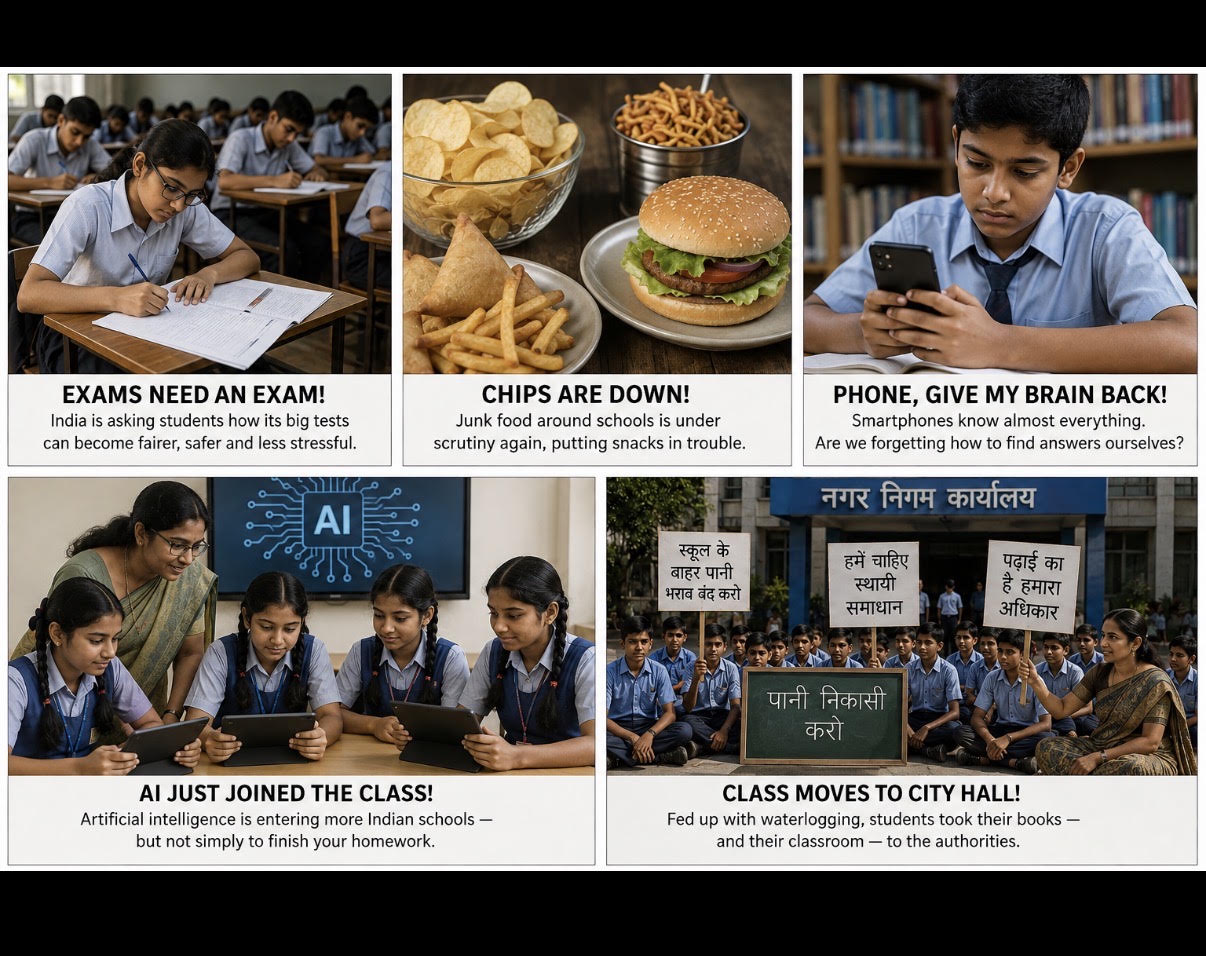

Screenshot 1. EXAMS NEED AN EXAM! India is asking students how its big tests can become fairer, safer and less stressful. A government committee headed by Nandan Nilekani is seeking suggestions from students, parents, teachers and experts on improving public examinations. It will explore ways to make exams more secure, transparent and accessible, while considering …
Screenshot 1. EXAMS NEED AN EXAM!
India is asking students how its big tests can become fairer, safer and less stressful.
A government committee headed by Nandan Nilekani is seeking suggestions from students, parents, teachers and experts on improving public examinations. It will explore ways to make exams more secure, transparent and accessible, while considering technology and student well-being. Millions of young people sit examinations every year, so asking those who actually take them could produce answers. From stressful schedules to fairness and security, plenty is up for discussion. For once, students aren’t the only ones being assessed. India’s examination system is sitting for a test.
2. CHIPS ARE DOWN!
Junk food around schools is under scrutiny again, putting favourite snacks in trouble.
The Rajasthan High Court has raised concerns about junk food available to schoolchildren and whether rules are being properly followed. Foods high in fat, salt and sugar have long worried health experts, when children eat them frequently. Schools today are increasingly encouraged to offer healthier choices in canteens. But changing what children eat isn’t simply about removing packets of chips. Taste, price, convenience and habits matter too. The latest discussion puts school food firmly back on the menu — though perhaps not the menu hungry students would choose.
3. PHONE, GIVE MY BRAIN BACK!
Smartphones know almost everything. Are we forgetting how to find the answers ourselves?
Uttar Pradesh Chief Minister Yogi Adityanath advised schoolchildren to use smartphones less and read books more, warning against becoming overly dependent on phones. Smartphones can be learning tools, putting dictionaries, videos, lessons, maps and information in our hands within seconds. But endless scrolling can consume hours. His comments come amid a wider debate about children’s screen habits and how technology affects learning and independent thinking. Nobody expects smartphones to disappear from young lives. The challenge is learning when to swipe, when to search — and when to stop.
4. AI JUST JOINED THE CLASS!
Artificial intelligence is entering Indian schools — but not simply to finish your homework.
Students and teachers across seven Indian states, including Goa, are set to gain access to artificial intelligence and digital creativity tools. The new programme aims to develop creative problem-solving, digital storytelling and AI-assisted content creation. Millions are expected to benefit as it expands. AI is already rapidly changing how people write, design, research and work, making understanding the technology very useful. But learning to use AI isn’t the same as asking it to do everything. Sometimes, the smartest tool in the classroom should still be your brain.
5. CLASS MOVES TO CITY HALL!
Fed up with waterlogging, students took their books — and their classroom — to the authorities.
Students and teachers in Roorkee staged a protest after waterlogging caused problems outside their school. Instead of staying home, around 60 went to the municipal corporation office and held a class there. Carrying placards and a blackboard, they turned an official’s office into a classroom. Their lesson attracted attention. Municipal authorities sent equipment to remove the water, although the school wants a permanent solution. No shouting, no abandoned lessons — just students, teachers and books arriving where decisions are made. Sometimes a classroom makes quite a statement.
Join the Club
Like this story? You’ll love our monthly newsletter.