
Goa’s Food Safety Commissioner shares simple tips children can follow to stay food-smart — from reading snack labels and washing hands to choosing safe street food, eating healthy and spotting suspicious packaging.
Who’s Watching What’s on Your Plate?
Goa’s Food Safety Commissioner shares simple tips for children on safe snacks, street food, food labels, hygiene, healthy eating and handwashing.
From the packet in a schoolbag to the chaat stall outside, the groceries arriving at the doorstep, and the kitchen serving hundreds of meals, someone has to keep an eye on food safety.
Goa’s Food Safety Commissioner Mrs Shweta Dessai talks about what goes on behind the scenes—and why children need to become smarter about what they eat.
Q. Let’s begin with you. How did you find your way into food safety?
My background is actually in pharmacy. I did my schooling in my village, Cuncolim, and then graduated in pharmacy. After that, I worked in the pharmaceutical industry for more than eight years in the manufacturing of tablets.
I then joined this organisation as a drug inspector. After five years, I was promoted to Assistant Drug Controller, and five years later, I became Deputy Director.
From August 2024, I was given the additional responsibility of food along with drugs, and since then I have been serving as the Food Safety Commissioner.
It is a position that requires a lot of dedication, hard work and commitment. Fortunately, I have strong family support. My husband is also in government service, so he understands the demands of the job. My extended family and my parents have also been very supportive.
Q. Most children probably imagine food safety as someone checking a restaurant kitchen. Is the job much bigger than that?
Yes, it is much bigger. Food safety involves enforcement, inspections, sampling and ensuring that food business operators follow the required standards. But another very important part of our work is awareness.
We try to create awareness among the general public and consumers, but we also conduct specific programmes for food business operators.
Certain sectors require particular attention. Meat and meat products, for example, are a sensitive and critical area and have a significant unorganised component. We bring food business operators in for training and explain the hygiene practices they are expected to follow — personal hygiene as well as the cleanliness and hygiene of their surroundings.
And this cannot be a one-time job. Awareness and training have to continue.
Q. India has such a huge unorganised food sector — the mithaiwala, chaatwala, fish seller and small vendors. Can everything really be checked?
The food sector in India is not 100 per cent organised. Steps are gradually being taken to bring more of it into the organised sector.
You also have to remember where our food comes from. A large amount comes from agriculture, and fisheries too has a considerable unorganised component.
We have checks in place. Samples of fish, agricultural produce and other food products are drawn and analysed.
But it is simply not possible to check 100 per cent of all food. Therefore, random sampling is carried out.
Q. How does Goa compare with other states when it comes to food safety?
Goa is in a good position partly because we are a smaller state. We have around 39 Food Safety Officers across Goa and more than 30,000 food business operators. So our ratio of Food Safety Officers to food business operators is quite good compared with many other states.
Our food safety system has also been assessed by FSSAI on several parameters — infrastructure, manpower, initiatives, enforcement, sampling targets, inspections and whether the required work is being carried out properly.
Among the smaller states, Goa stood first for five consecutive years. That was a very good achievement for us.
Q. Families now order everything from dinner to breakfast cereal through delivery apps. Has that made food safety more complicated?
Online ordering has become part of life. Sometimes it is necessary. I order online too.
Earlier, people would physically go to a shop, look at different products, compare prices and then make a choice. Today, with busy schedules, that is not always possible, so people use e-commerce platforms.
But it is important to understand that these platforms are also part of the regulatory system. They require licences, with some coming under the Central Licensing Authority and others under the state.
Stores operating through quick-commerce platforms are also regulated. Where they fall under the state regulator, we inspect the premises. If we find non-compliance, improvement notices can be issued and the required procedure follows.
So online food and grocery businesses are not outside the food-safety system.
Q. Suppose a child opens a packet and notices that the expiry date is missing. Or a parent feels there is something suspicious about a food product. What should they do?
Any consumer can complain.
It could be suspicious activity at a manufacturing unit, or something wrong with a product that has been purchased. Perhaps the expiry date is missing, the label is not proper or something else appears wrong.
Consumers can approach the FDA through the available telephone, helpline and complaint channels. Complaints can also be made through FSSAI’s Food Safety Connect system. These complaints are routed to the appropriate authorities for action.
There are also government grievance mechanisms where consumers can submit details and photographs.
The important message is: don’t simply ignore something because you are an ordinary consumer. Consumers have the right to raise a concern.
Q. Children often buy snacks themselves. What should they learn to check?
The first thing is awareness.
A child does not have to become an expert in food law, but children can learn to look at what they are buying. With packaged foods, look at the label and the dates. Look at the condition of the packet.
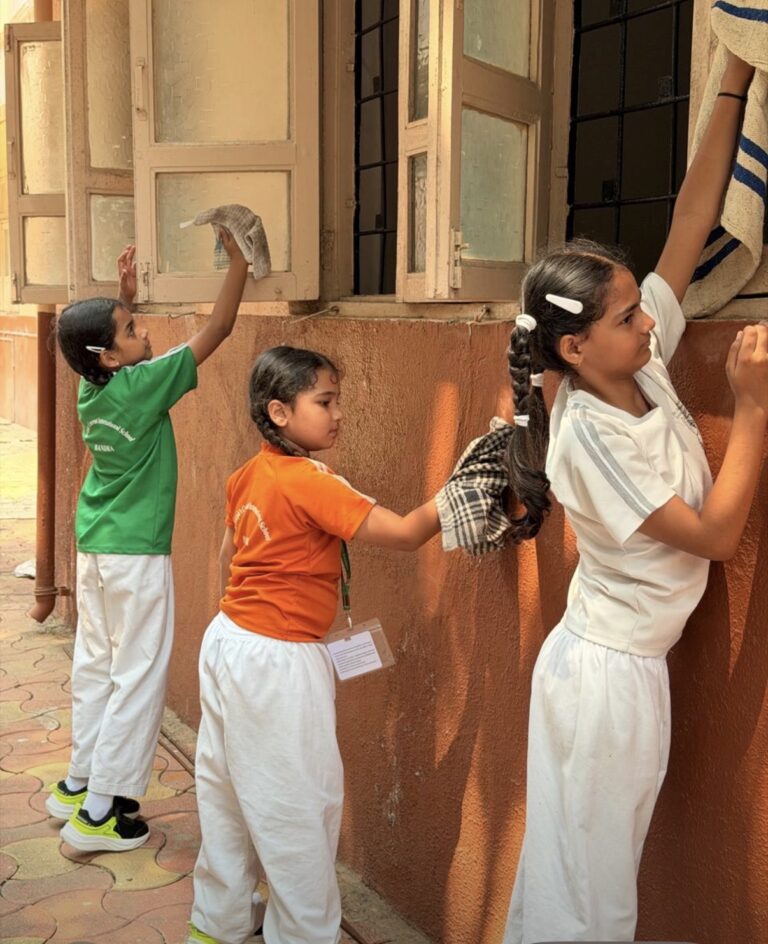
And children should learn that food safety is also about hygiene. Before eating, wash your hands properly with soap.
During Covid, everyone was taught how important correct handwashing is. That lesson should not disappear now that Covid is no longer dominating our lives.
Children touch desks, railings, doors, phones, bags and many other surfaces. Microbes can be present on these surfaces. Before touching food, washing your hands properly with soap and water is very important. Simply putting your hands under water is not the same thing.
Q. What about the chaat stall or street-food cart? Children love street food.
Street-food vendors are an important group in our awareness programmes.
Under an Eat Right initiative, we have been training street-food vendors in personal hygiene and basic food safety. This year alone, more than 500 street-food vendors have been trained.
This initiative has been continuing since around 2017, when Goa was selected as a pilot state by FSSAI.
The idea is not simply to tell people, “Don’t eat street food.” The important thing is to improve the way food is prepared, handled and served.
Q. Should children themselves learn to observe how their food is being handled?
Yes. Awareness should begin early.
Children can understand basic things: Are hands clean? Is food being handled hygienically? Is the food properly stored? Is the place where it is being prepared clean?
These are habits of observation. Once children start understanding food safety, they carry that awareness with them as they grow older.
Q. Does the FDA actually enter schools and look at what is happening in their kitchens?
Food-serving campuses are covered through food-safety initiatives and inspections. We also have the Eat Right Campus initiative.
Where a large number of people are present and food is being served, the kitchen and food-safety practices become important. There are inspections and, under the Eat Right Campus certification process, third-party audits are also involved.
Schools are particularly important because children spend so much of their day there.
FSSAI’s Eat Right programme itself looks beyond simply preventing unsafe food; it promotes safe, healthy and sustainable eating and greater awareness about food choices.
Q. So would you like food safety to become something children actually learn about in school?
Awareness among children is extremely important.
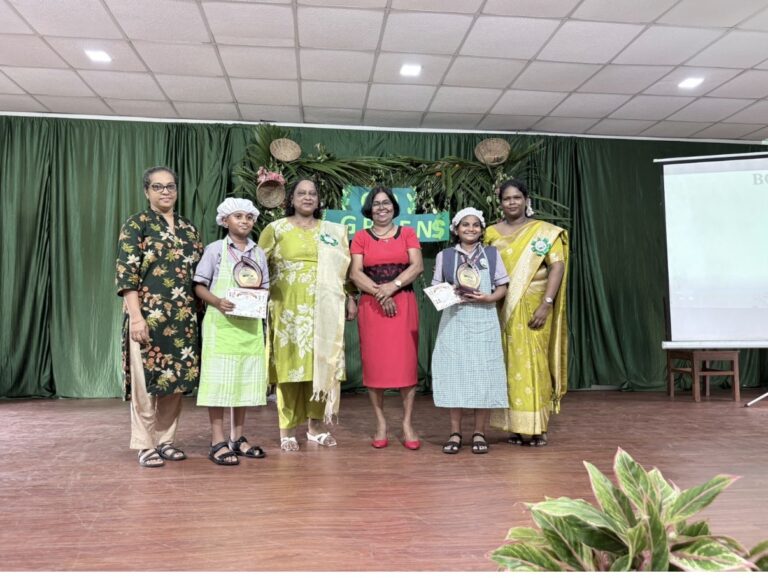
We involve schoolchildren through various activities and competitions. We have had poster competitions and other activities through which students learn about food, food safety, hygiene and the choices they make.
It should start with children. When they learn these things at a young age, they are more likely to practise them when they grow up.
Even something as basic as proper handwashing can make a difference.
Q. Food that is safe isn’t necessarily food that is healthy, though, is it?
That is an important distinction.
We need to look not only at whether food is hygienically prepared but also at whether it is nutritious.
I often tell people that health depends on what you eat, how you eat, how much you eat and what time you eat. These mindful eating habits are important.
People should know what nutritious food is and what should be on their plate. It should not simply be rice and curry. There should be a sizeable amount of vegetables as well. Different nutritious foods, fruits, seeds and millets can be incorporated into the diet.
The portion of food also matters — how much you eat and how often you eat.
Q. Children hear adults constantly saying, “Eat healthy!” What else matters apart from food?
Physical activity.
Eating is one part of a healthy lifestyle, and exercise is another. A sedentary lifestyle contributes to lifestyle-related health problems.
Walking, cycling, swimming or some other form of physical activity should be part of life.
If people combine better eating habits with regular physical activity, we can reduce the burden on our healthcare system too. Eventually, poor health affects individuals and families — including financially.
Q. Do you practise all these rules at home? Does your family get inspected at the dining table?
No! In fact, when my son was small, he himself was very particular about washing his hands.
He was very disciplined and systematic. Even now, sometimes he is the one who points things out to me about the food we are buying — for example, what a particular food contains.
So indirectly, as a family, we look at whether something is hygienically prepared and whether it is nutritious.
And that shows why teaching children matters. Sometimes it is the child who ends up reminding the adult.
Q. You have a job where saying “no” can affect someone’s business. Does being Food Safety Commissioner make you unpopular sometimes?
When I am sitting in this chair, I cannot please everyone.
I have to make decisions according to what is right and what is wrong. Suppose I ask an officer to inspect certain premises and deficiencies are found. The business may be affected for some time because the required standards have not been maintained.
Naturally, that person may not be happy with me.
But as public servants, we have to perform our duty. Public health is the main reason we are here.
In fact, we are fortunate to be in a department where our work allows us to contribute directly to public health.
Q. After spending your career inspecting medicines and food, what is the one lesson you would most like children to take away?
I would say: start taking responsibility for your health while you are young.
Understand what you are eating. Learn what nutritious food is. Pay attention to hygiene. Wash your hands properly before you eat. Be conscious of how much you eat and when you eat. And combine good eating habits with physical activity.
Health is wealth, but health also depends greatly on the choices we make every day.
Children who learn those choices early are more likely to carry them through life.
Join the Club
Like this story? You’ll love our monthly newsletter.