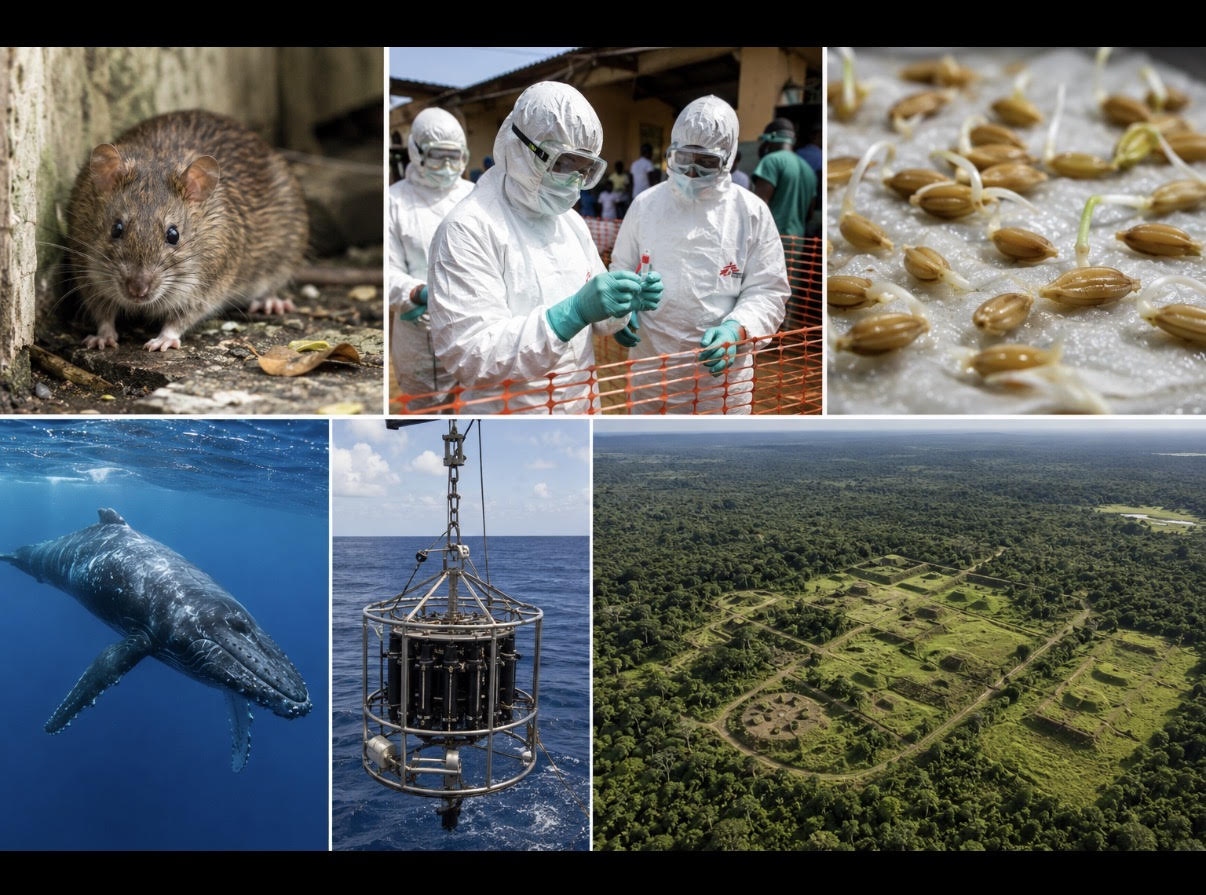

? Rats, Dust and a Dangerous Virus How Do Hantaviruses Spread? Hantaviruses are a group of viruses carried mainly by infected rodents such as rats and mice. People may become infected when they breathe in dust contaminated by rodent urine, saliva, or droppings. Infection may also occur when contaminated material enters the eyes, nose, mouth …
? Rats, Dust and a Dangerous Virus
How Do Hantaviruses Spread?
Hantaviruses are a group of viruses carried mainly by infected rodents such as rats and mice.
People may become infected when they breathe in dust contaminated by rodent urine, saliva,
or droppings. Infection may also occur when contaminated material enters the eyes, nose, mouth or broken skin.
The best protection is to prevent rodents from entering homes, kitchens, and food-storage spaces. Rodent droppings should not be swept or vacuumed while dry because this can send contaminated dust into the air. Adults should disinfect the area carefully before cleaning it.
Hantavirus infections are uncommon, but they can become serious. Their spread reminds us why clean surroundings, safe food storage and proper waste disposal are important.
? Ebola Fighters in Action
How Scientists and Health Workers Control Ebola
Ebola disease is a serious viral illness that has caused outbreaks, mainly in parts of Africa.
The virus can spread through direct contact with the blood or other body fluids of an infected person or animal. It can also spread through objects, clothing or bedding contaminated with these fluids.
Scientists and healthcare workers now have improved testing methods, protective equipment and vaccines that can help control certain Ebola outbreaks.
When an outbreak is detected, trained teams identify people who may have been exposed, care for patients and work to prevent further transmission.
Early detection, safe medical treatment, hygiene and accurate public information are all essential. Scientists continue studying Ebola so that future outbreaks can be identified and controlled more quickly.
? Can Rice Seeds Sense Rain?
Seeds Respond to the Sound of Falling Water
Rice seeds do not have ears, but a remarkable study suggests that they can react to the sound and vibrations created by falling rain.
In laboratory experiments reported in 2026, rice seeds exposed to the sound of falling water germinated around 30 to 40 per cent faster than similar seeds that were not exposed to it.
Researchers believe the vibrations shake tiny gravity-sensing structures inside the seeds. This may help signal that water has arrived and that conditions are suitable for the seed to begin growing.
The findings do not mean plants “hear” exactly as humans do. Instead, they show that plants may detect physical signals in their surroundings in surprising ways.
Scientists are now investigating whether other types of seeds respond similarly.
? Listening to the Songs of Whales
Underwater Sounds Reveal Ocean Secrets
Whales use calls, clicks and songs to communicate underwater. Because sound travels efficiently through water, some whale calls can be detected many kilometres away.
Scientists use underwater microphones called hydrophones to record these sounds. The equipment may be placed on the ocean floor, attached to research vessels or carried by underwater robots.
By studying the recordings, researchers can learn where whales travel, when they feed and how their behaviour changes over time.
Ocean sound recordings may also reveal changes caused by warming seas, human activity and underwater noise. Researchers can sometimes study whales without needing to see or approach them.
Every call recorded beneath the waves offers another clue about the animals living in Earth’s largest habitat.
? Ancient Cities Revealed in the Amazon
Laser Technology Uncovers a Forgotten World
For many years, some researchers believed that the ancient Amazon could not support large, organised communities.
LiDAR technology has helped change that view.
LiDAR sends laser pulses towards the ground from an aircraft. Computers then use the returning signals to create detailed maps, even when buildings and roads are hidden beneath thick vegetation.
LiDAR surveys of Ecuador’s Upano Valley revealed an extensive network of settlements containing raised homesites, plazas, roads, causeways and ceremonial centres. Some of the settlements are at least 2,500 years old.
These discoveries show that ancient communities did not simply live in the rainforest. They built settlements, grew food, constructed roads and changed the landscape around them.
Scientists believe many more archaeological sites may still be hidden beneath forests around the world.
Small Signs Can Tell Enormous Stories
A speck of infected dust can teach researchers about disease. A vibrating rice seed can reveal how plants respond to rain. A distant whale song can help scientists understand an entire ocean.
Even forests can hide roads and cities for thousands of years.
Science often begins with something tiny: a sound, a mark, a movement or a question. When researchers examine these clues closely, they can uncover stories that change how we understand life, history and the Earth itself.
Join the Club
Like this story? You’ll love our monthly newsletter.