
A 14-year-old shares practical lessons on time management, skill-building, communication, comparison and becoming the person you want to be.
By Deepansh Komarpant
As a 14-year-old boy, if I had another chance to travel back in time and give some
advice, I would definitely give this advice.
Time management
Master time management (Eat That Frog by Brian Tracy): Most people suggest that to
be perfect at time management, we should have complex timetables, rigid schedules,
color-coded calendars, etc. But all these end up wasting more time. Instead, do the
most important and time-consuming task first, when you're at the peak level of your
energy. The rest of the things become easier.
Use the time wisely: Once you are done with the work, avoid wasting much time on
cheap dopamine like scrolling. Instead, use that time for something productive like
cycling, learning a new skill, or playing chess — anything productive that gives you the
same satisfaction without the empty aftertaste.
Learning skills and building
The teenage years are the best time for learning. The brain is still getting shaped by the
environment, the habits, and the people around you, which means every skill you learn
now will do double work: not only learning the skill itself but also sharpening your ability
to recognize patterns. This second effect compounds for years.
But none of these works without a strong foundation. Just chasing the appearance of
being good while skipping the basics is a shortcut to nowhere. Build a really good base
first, and everything becomes easier.
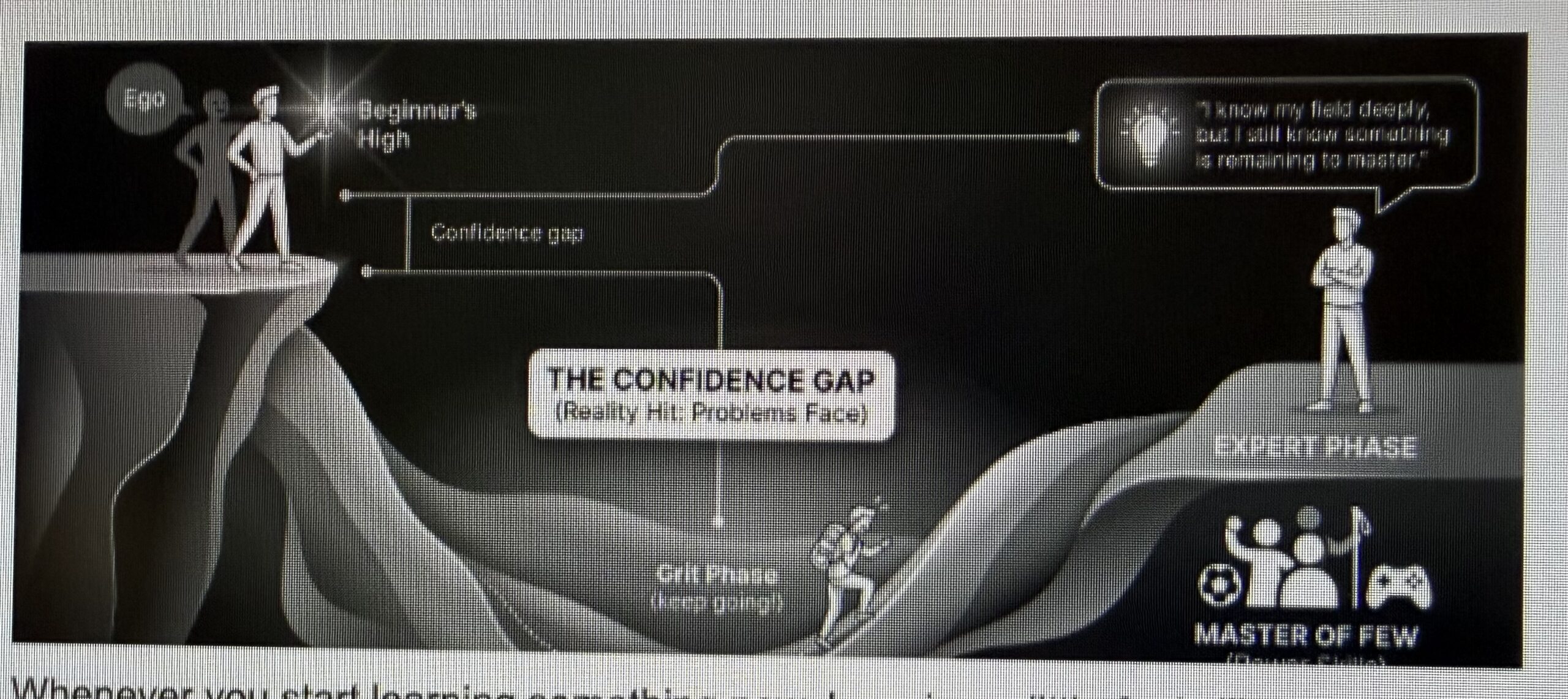
The Dunning-Kruger Effect
Whenever you start learning something new, knowing a little feels like knowing a lot;
confidence runs high, but it hasn't been tested yet. Then the real obstacles (Grit Phase)
show up, and most people quit right there. Survive that stretch, and you reach the top of
the mountain (Expert phase); you become the master of that skill. But even at the top,
you know there is still more to learn, and that’s the confidence gap; you know that there
is still something remaining to be learnt.
Comparison
Most people tell us never to compare ourselves to others. But it's not entirely true. We
should compare ourselves to the top person you can find in your environment. We should try to
notice what the top people are doing differently that makes them better; help to understand the
patterns of that person and improve them in yourself. But it’s only good as long as you are not
jealous, and should not talk rudely or spread any hate about the person. Being friends with
them would help you get more advice and opportunities.
Communication
One of the major skill is ‘communication’. The better you are at communication, the more people
you can form a better network with, and communication plays a role throughout your life.
Most of the people who want to communicate but tag themselves ‘shy’ are just a myth. It’s the
effect of your negative surroundings, and we are given the tag of ‘shy’ or ‘stage fright’. But you
can simply improve your communication by watching shows with subtitles, listening to podcasts,
and going to competitions, like local shark tank idea presentation. It will boost your presentation
skills 80 times better than others
One piece of advice that my father gave me once
“If you want to be the person you are aiming for, you have to work hard on yourself like like a ragdoll constantly until you become one
(Deepansh Komarpanth is from Bhatikar Model High School.)
Join the Club
Like this story? You’ll love our monthly newsletter.