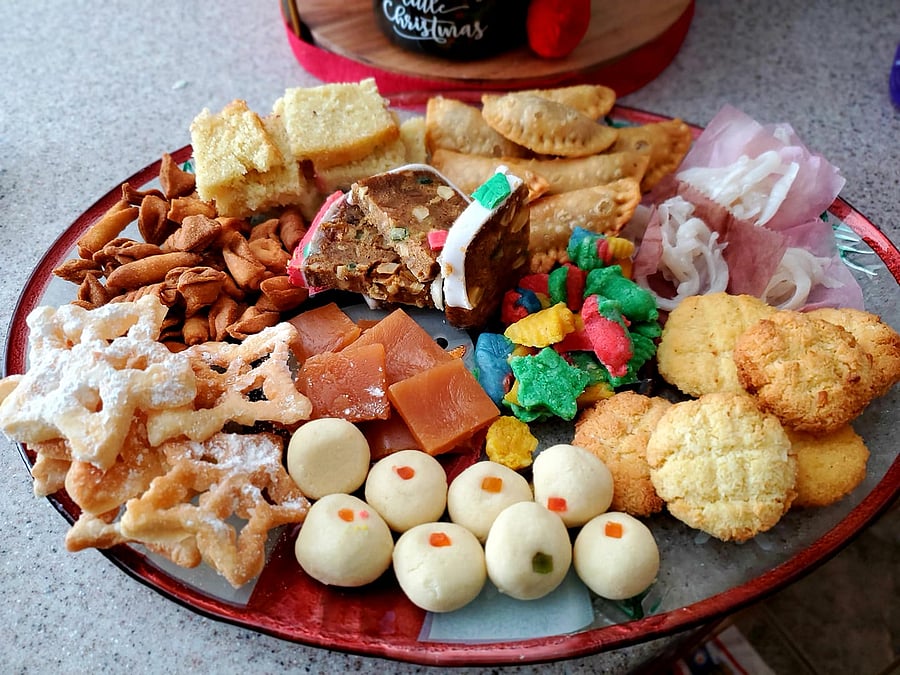

Once upon a December in India, kitchens turned into tiny sweet factories. Pots bubbled, trays clinked, and the smell of coconut, ghee, and sugar floated everywhere. Christmas was coming—and so were the sweets! In Goa, Maria aunty rolled little curls of dough called kalkals. They fried like tiny seashells and glittered with sugar once cooled. …
Once upon a December in India, kitchens turned into tiny sweet factories. Pots bubbled, trays clinked, and the smell of coconut, ghee, and sugar floated everywhere. Christmas was coming—and so were the sweets!
In Goa, Maria aunty rolled little curls of dough called kalkals. They fried like tiny seashells and glittered with sugar once cooled.
Beside her, neureos—crescent-shaped pockets filled with coconut, jaggery, and nuts—waited to be packed. Children believed that if you ate one without dropping crumbs, you earned a Christmas wish.
Uncle Albert worked slowly, pouring one thin layer at a time to make bebinca, the queen of Goan sweets. Seven, eight, sometimes nine layers—each baked patiently. “Good things take time,” he always said.
And then came the most magical sweet: rose cookies. Grandma dipped a hot iron mould into batter and placed it in oil. FSSSH! The batter slipped off and bloomed into a perfect crispy flower. Kids called them “edible roses” and raced to catch the warm ones.
Last came doce de grão, a chickpea sweet, soft and golden.
“Why chickpeas?” asked the children.
“Because Christmas is not just sugar,” Grandma smiled. “It is work, patience and sharing.”
When all the sweets cooled, baskets and tins travelled from house to house—neighbours, teachers, tailors, postmen. Everyone tasted a bit of someone else’s kitchen.
And every December, one rule stayed the same:
Eat the sweets happily, and share a little sweetness with someone who may not be as fortunate.
Because in India, the sweetest part of Christmas isn’t dessert—it’s sharing joy.
Join the Club
Like this story? You’ll love our monthly newsletter.