
bullying in schools, effects of bullying, school bullying awareness, warning signs of bullying, child safety, cyberbullying, student mental health
Bullying is never just a joke. Learn how repeated teasing, exclusion, and online abuse affect children—and why early support can make a difference.
By Tara Rastogi
A tragedy in the Philippines has once again reminded the world why bullying deserves everyone’s attention.
The recent school shooting in Tacloban City, Philippines, has left educators, parents and students around the world deeply saddened. According to investigators, the two teenage suspects claimed they had experienced years of bullying before the attack. The investigation is still ongoing, and no single reason can ever explain such an act of violence. However, the tragedy has once again sparked an important global conversation about bullying in schools and the emotional impact it can have on young people.
India has thankfully not witnessed school shootings of this nature. Yet bullying remains a reality for many children.
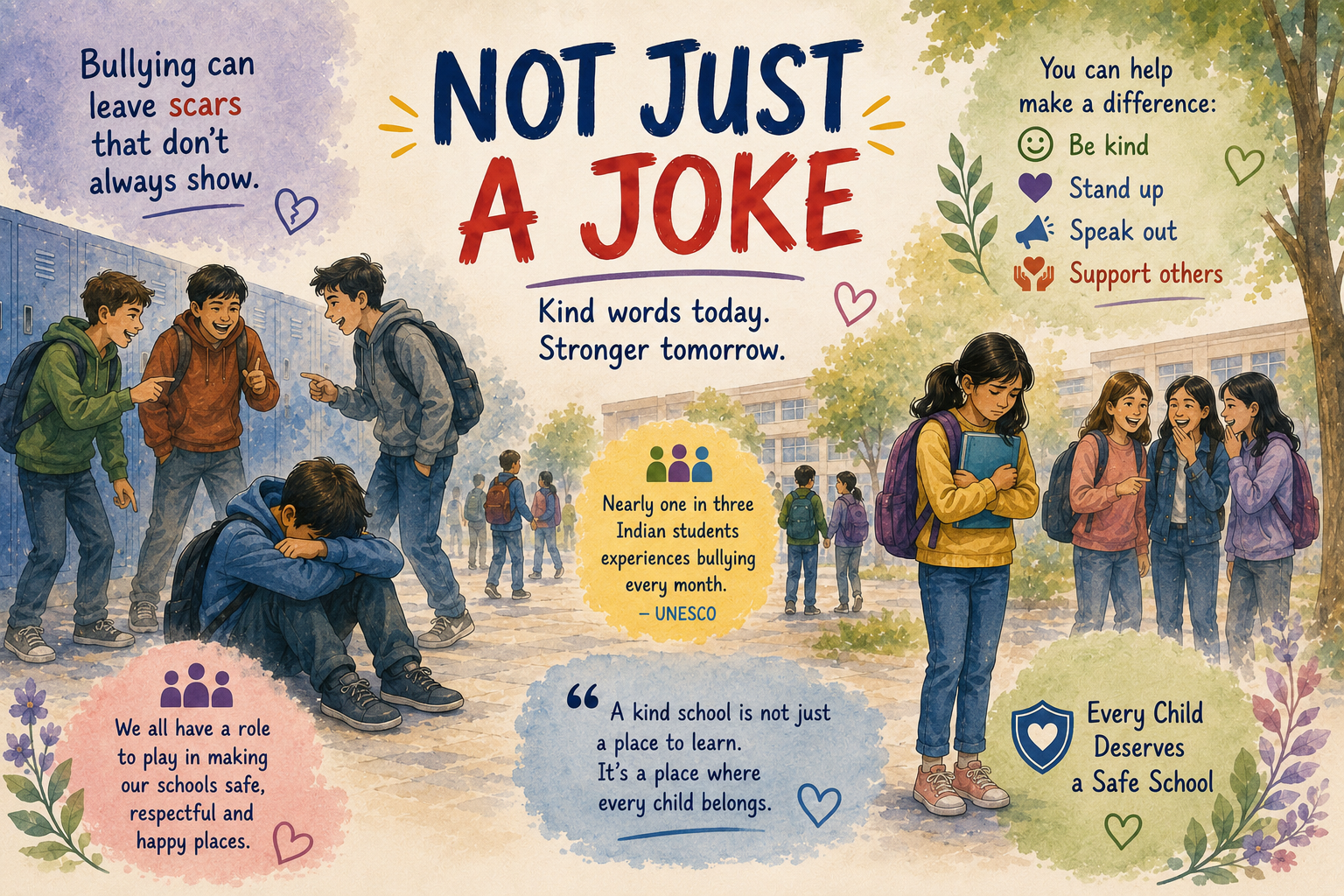
According to the United Nations Educational, Scientific and Cultural Organization (UNESCO), nearly one in three Indian students experiences some form of peer bullying every month. Many incidents, however, go unreported. Some children fear being labelled a “snitch”. Others worry the bullying will worsen if they speak up. Some simply believe no one will understand how deeply they are hurting.
“Bullying doesn’t always look serious,” says Ved Kulkarni, a Class 11 student. “Sometimes it starts as a joke. But when the same person is picked on every day, it stops being funny. Many students stay quiet because they fear becoming the next target.”
While researching this article, jusUNMUTE approached several schools for their views, but very few were willing to participate. Their hesitation reflects how sensitive the subject remains—and why it deserves more open conversations.
Bullying is much more than teasing. It can include repeated name-calling, mocking someone’s appearance, spreading rumours, excluding classmates, damaging belongings, making threats or targeting someone online. What one child laughs off may leave another carrying emotional scars for years.
Parents are often the first to notice something is wrong.
“When my daughter suddenly stopped wanting to go to school, I knew something had changed,” says Tina Shah. “Children don’t always tell us what they’re going through. We have to notice the small changes.”
Teachers say those signs matter.
“A child who suddenly becomes quiet, sits alone or stops participating may be silently asking for help,” says Mrs Parveen Rehman, a teacher at Delhi Public School, Mathura Road. “Early intervention can make all the difference.”
Many schools today are strengthening counselling services and student well-being programmes. But every child must also know they will be believed, supported and protected when they speak up.
The lesson from the Philippines is not one of fear. It is a reminder that every child deserves to feel safe, respected and heard.
Because bullying is never “just a joke.”
Join the Club
Like this story? You’ll love our monthly newsletter.